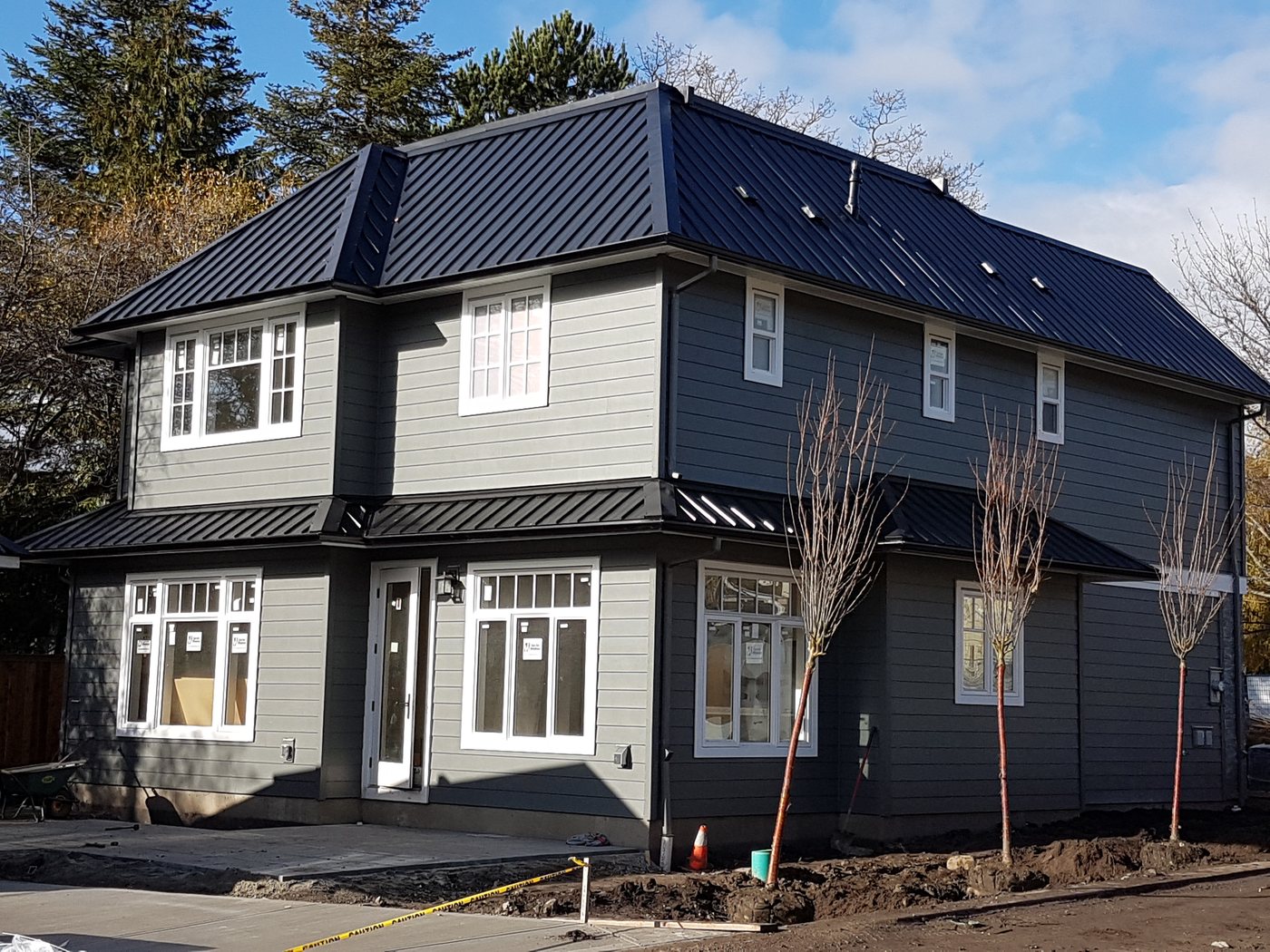
Most roof replacements on a typical house take between one day and two weeks of work on site, depending mostly on the material. Asphalt shingles are the quickest, usually one to three days. A standing seam metal roof generally takes three to seven working days. Slate and tile take the longest, often two weeks or more.
That's the short answer. The longer one is that the days on your roof are only part of the timeline. From the first phone call to the final cleanup, most projects run a few weeks, and nearly all of that is waiting for materials and weather rather than work.
Here's what the whole process looks like, what each stage takes, and what tends to stretch it.
Time on Site, by Roofing Material
These are typical ranges for a straightforward detached home with one layer of old roofing to remove. Bigger or more complicated roofs take longer.
| Material | Typical time on site | Why |
|---|---|---|
| Asphalt shingles | 1–3 days | Fast to lay, forgiving around details |
| Metal (standing seam) | 3–7 working days | Panels and flashings are measured and fitted to the roof |
| Cedar shakes | 4–8 days | Installed piece by piece |
| Slate or clay tile | 2 weeks or more | Heavy, slow to place, and often needs structural work first |
Metal takes longer than shingles because it's closer to carpentry than to laying a surface. Every panel is cut to length, and the flashing around each valley, chimney, skylight and wall is formed to fit. That extra care is also a large part of why a metal roof lasts two to four times as long.
The Full Timeline, Start to Finish
1. Assessment and quote: a few days
Someone comes out, measures the roof, checks the decking and ventilation where they can, and talks through options. A proper written quote should follow within a couple of days. We send ours within 48 hours of the site visit.
2. Scheduling and materials: usually the longest wait
Once you sign, materials get ordered. Shingles are generally in stock locally. Metal is made to order in your chosen colour and profile, so allow a couple of weeks for it to arrive, sometimes longer for less common finishes. How soon the crew can start also depends on the season. Late spring through early fall is the busy stretch on Vancouver Island, and good roofers book up.
If the roof you want is heavy enough to need an engineer's report and structural reinforcement, which is common with slate and tile, add several weeks here before any roofing begins.
3. Tear-off: about a day
The old roof comes off down to the deck. On most homes this is done in a day, and the roof is made watertight again before the crew leaves. A second layer of old shingles underneath, which is more common than people expect, adds time.
4. Deck repairs: zero to two days
This is the one stage nobody can price or schedule precisely in advance, because the decking is hidden until the old roof is off. Sound decking means no delay. Soft or rotted sheathing has to be replaced before anything goes over it. In our damp climate, some repair around eaves, valleys and old leak points is fairly common.
5. Installation: the bulk of the time on site
Underlayment first, then the roofing itself, then flashings, ridge and trim. This is where the ranges in the table above come from.
6. Cleanup and walkthrough: half a day
Debris removed, the yard swept with a magnet for nails and screws, gutters cleared, and a final look over the roof with you.
What Makes a Roof Replacement Take Longer
- Rain. A roof shouldn't be opened up when rain is coming. In Victoria that mostly means watching the forecast and working in dry windows from October to April. A good crew would rather lose a day than tear off ahead of a storm.
- Roof complexity. Valleys, dormers, skylights, chimneys and multiple levels all take far longer than open roof area. Two houses with the same square footage can differ by days.
- Steep pitch. Steeper roofs need more safety setup and slow everything down.
- Hidden damage. Rotted decking or framing found during tear-off.
- Access. Tight lots, no driveway, or landscaping that has to be protected.
- Add-ons. New gutters, skylight replacements or ventilation upgrades done at the same time. These are worth doing while the roof is open, but they add time.
Can You Stay Home While the Roof Is Replaced?
Yes. Almost everyone does. The work is all outside and the house stays watertight overnight. What you'll notice is noise, especially during tear-off, and a crew and materials in your driveway.
A few things make it easier:
- Move vehicles out of the driveway and garage before the crew arrives.
- Take down anything fragile hanging on walls directly under the roof. Hammering carries.
- Cover or move things stored in the attic. Dust and grit fall through during tear-off.
- Keep pets and kids clear of the work area, and plan around the noise if you work from home.
- Let your neighbours know.
Is There a Best Time of Year?
Dry weather makes any roof job faster and more predictable, which is why summer is the busiest season and the hardest to get onto a schedule. The trade-off is worth knowing: if you book in summer for a roof that's already failing, you may be waiting on a leak.
The mild winters on southern Vancouver Island mean roofing continues year-round here. Metal in particular can be installed through the cooler months, since it doesn't rely on warm temperatures to seal the way asphalt shingles do. Winter jobs take more calendar days because of weather holds, but start dates are usually easier to get.
The Bottom Line
Plan on one to three days on site for asphalt, about a week for metal, and a few weeks overall from signing to cleanup once ordering and scheduling are counted. If a roofer promises a much shorter time than that on a complicated roof, ask what's being skipped.
The most reliable way to get a real number is to have the roof looked at. Size, pitch and the number of details on your particular roof decide the schedule far more than averages do.
Want a real timeline for your roof? We'll come out, measure, and send a written quote within 48 hours that includes how long the job should take and when we could start. Free, no obligation.
Request a Free EstimateCommon Questions
Can a roof be replaced in one day?
A small, simple asphalt roof often can. Larger homes, steep or complex roofs, and any material other than shingles usually can't be done properly in a day.
How long does a metal roof take to install?
Typically three to seven working days on site for a straightforward home, plus a couple of weeks beforehand for the made-to-order panels to arrive.
What happens if it rains partway through?
Work pauses. The roof is kept watertight at the end of each day, with underlayment or tarps over any open section, so a rain delay costs time rather than causing damage.
Do I need a permit to replace my roof?
It depends on your municipality and on whether the work changes the structure. Replacing a roof like for like is treated differently from a job that needs structural reinforcement. Check with your local building department, or ask your roofer, before work is scheduled.
Related reading: Roof Replacement Cost in Victoria BC · 7 Signs You Need a New Roof · Best Roofing Material in 2026 · Victoria roofing services